EASTER SUNDAY
April 5
RESURRECTION SUNDAY
 |
Peter and John at the tomb.
Giovanni Francesco Romanelli (Italy, Viterbo, circa 1610-1662) |
Note: This post is actually concerned with the theological/thematic relationship between the Easter Vigil and Easter Sunday (morning) readings. Due to the multitude of Vigil readings I focused on just a few. For those interested, I’ve appended a complete list of the readings, along with pertinent Catechism references, to the end of this post. I utilized various AI tools to assist in creating this and the following post.
The readings of the Easter Vigil and Easter Sunday together proclaim the great mystery of God’s plan of salvation; from creation’s first day to the eighth day, Resurrection Sunday, the first day of God’s New Creation. They are not two separate liturgies but more like two movements of the same symphony: the Vigil takes us through the economy of salvation throughout history, while Easter Sunday celebrates the realization of that history in the Resurrection of Christ and the renewal of all creation. Both proclaim the central mystery of the Christian faith; Christ has died, Christ is risen, Christ will come again, and in doing so they illuminate the interwoven themes of new creation, universality of salvation, and hope.
New Creation
The Vigil begins with the opening words of Genesis: “In the beginning, God created the heavens and the earth.” This reading does more than recall the origin of the material world; it sets the stage for a new creative act. The Resurrection, celebrated in the final Gospel of the Vigil and again on Easter Sunday (John 20:1–9), is presented as a new creation, a reordering of existence itself. John deliberately notes (in the Greek text) that the empty tomb is discovered “on day one of the week;" which is very poor Greek, but very good Hebrew (“Evening came and morning followed, day one”, Literal rendering ot Gen 1:5) recalling the first day of creation. The same God who once said, “Let there be light,” now brings forth the light of immortality from the darkness of the grave.
In Christ’s Resurrection, creation is renewed, healed, and elevated. The Catechism teaches that “Jesus’ Resurrection inaugurates the new creation” (CCC 349), and that “in his Passover, Christ opens to all men the way to new life” (CCC 654). Just as the first creation culminated in the creation of man and woman, so this new creation finds its fulfillment in the restoration of humanity in the image of the risen Christ. Saint Paul’s words to the Colossians on Easter Sunday make this transformation explicit: “If then you were raised with Christ, seek the things that are above” (Col 3:1). Baptized believers participate in this renewal now, living as those who already share in the risen life (CCC 1265–1266).
The Vigil’s movement from darkness to light, from death to life, sacramentally anticipates this new creation. The lighting of the Paschal candle, symbolizing the Risen Christ, re-enacts the moment when divine light first pierced chaos. The earth is not discarded but redeemed; humanity is not replaced but transfigured. Thus, the Easter mystery reveals that creation’s purpose from the beginning was to share in the glory of the Resurrection (CCC 280). St Irenaeus;
Universality of Salvation
The second great theme linking the Vigil and Easter Sunday is the universality of salvation; the revelation that God’s covenant love extends to all peoples. Throughout the Vigil, the readings trace how God’s saving will, first revealed to Israel, gradually unfolds toward universal inclusion. The crossing of the Red Sea (Exodus 14–15), central to the Vigil, not only commemorates Israel’s liberation from Egypt but prefigures baptism (CCC 1221): passing through the waters signifies death to sin and rebirth to new life. But this event also contains a universal horizon. God delivers a particular people in order to manifest His power to the nations—“that my name may be declared throughout all the earth” (Ex 9:16). In this sense, Israel’s salvation becomes a sign and instrument of God’s desire to save all humanity.
The Church Fathers saw in the Red Sea both a type of the Cross and a type of the baptismal font: all who pass through these waters—whether Jew or Gentile—emerge as members of God’s new people. As the Catechism explains, “By crossing the Red Sea, Israel was saved from slavery to Pharaoh. The Church sees in this an image of Baptism, by which all are freed from sin and made slaves of righteousness” (CCC 1221). In this way, the Red Sea narrative anticipates the breaking down of ethnic and covenantal boundaries, fulfilled in Peter’s Easter proclamation in Acts 10: “God shows no partiality, but in every nation whoever fears him and acts uprightly is acceptable to him.”
The universality proclaimed by Peter is not a negation of Israel’s election but its flowering. What God began with Abraham—the blessing of all nations through his seed (Gen 12:3)—reaches its consummation in the risen Christ. Through His death and Resurrection, the covenant expands to embrace the entire human family (CCC 781–782, 1226).
Hope
Finally, both the Vigil and Easter Sunday proclaim hope as the defining fruit of the Resurrection. The Vigil begins in darkness: the Church gathers before a darkened sanctuary, recalling the chaos of creation and the despair of sin. Yet from this darkness, a single flame is lit—the Paschal candle—signifying that the light of Christ cannot be overcome (John 1:5). The great Exsultet proclaims, “This is the night when Christ broke the prison-bars of death and rose victorious from the underworld.” Hope dawns as the Church listens to the story of salvation, culminating in the jubilant Alleluia of the Resurrection.
Easter Sunday continues this proclamation of hope, now personalized and interiorized. The Psalm cries out, “I shall not die, but live, and declare the works of the Lord.” The empty tomb, in John’s Gospel, becomes the locus of faith: Peter and John see and believe. The Resurrection transforms the world from within, filling human existence with a living hope that does not disappoint (cf. 1 Pet 1:3–4; CCC 655, 1817–1821).
This hope is not wishful thinking but participation in the reality of the risen life—a hope grounded in the promise that “when Christ your life appears, you too will appear with him in glory” (Col 3:4). The Vigil shows the cosmic dimension of this hope; Easter Sunday shows its existential depth. Together, they announce that creation itself will be renewed, all peoples will be gathered, and death will be no more.
Thus, the Easter Vigil dramatizes the divine story from creation to redemption, while Easter Sunday celebrates its fulfillment in the Resurrection. Both proclaim that the world, once fallen, is now re-created; that salvation, once particular, is now universal; and that hope, once fragile, is now immortal in the Risen Christ—the firstborn of the new creation.
APPENDIX
Readings and Catechism
Note: Scripture reading links with more than one possible reading (e.g., Gen 1:1-2:2 or 1:26-31a) contain both readings on a single page, the second option following the first. Clicking on a Catechism link will allow you to view all the referenced paragraphs on a single page.
Easter Sunday: The Resurrection of the Lord At the Easter Vigil in the Holy Night of Easter - C (Lect. #41)
First Reading: Gen 1:1-2:2 or 1:26-31a [Catechism: 36, 225, 243, 268, 279-280, 290, 292, 299, 307, 337, 355, 372-373, 703, 1218, 1602, 1604, 1607, 1652, 2002, 2331, 2402, 2415, 2427, 2501, 2809]
Responsorial Psalm: Ps 104:1-2, 5-6, 10+12, 13-14, 24+35 or Ps 33:4-5, 6-7, 12-13, 20-22 [Catechism: 292, 295, 703, 1333]
Second Reading: Gen 22:1-18 or 22:1-2, 9a, 10-13, 15-18 [Catechism: 332, 706, 1819, 2572]
Responsorial Psalm: Ps 16:5+8, 9-10, 11 [Catechism: 627]
Third Reading: Exod 14:15-15:1
Responsorial Psalm: Exod 15:1-2, 3-4, 5-6, 17-18 [Catechism: 2810]
Fourth Reading: Isa 54:5-14 [Catechism: 220]
Responsorial Psalm: Ps 30:2+4, 5-6, 11-12a+13b
Fifth Reading: Isa 55:1-11 [Catechism: 694, 762, 2121]
Responsorial Psalm: Isa 12:2-3, 4, 5-6 [Catechism: 2561]
Sixth Reading: Bar 3:9-15, 32-4:4
Responsorial Psalm: Ps 19:8, 9, 10, 11
Seventh Reading: Ezek 36:16-17a, 18-28 [Catechism: 368, 715, 1287, 1432, 2812, 2814]
Responsorial Psalm: Ps 42:3, 5; 43:3, 4 or 51:12-13, 14-15, 18-19 [Catechism: 298, 431, 2112]
Eighth Reading: Rom 6:3-11 [Catechism: 537, 628, 648, 654, 730, 790, 977, 1006, 1085, 1227, 1694, 1697, 1987, 2565]
Alleluia Verse: Ps 118:1-2, 16-17, 22-23 [Catechism: 587, 756]
Gospel: Matt 28:1-10 [Catechism: 500, 641, 645, 652, 654, 2174]
Gospel: Mark 16:1-7 [Catechism: 333, 641, 652, 2174]
Gospel: Luke 24:1-12 [Catechism: 626, 640-641, 643, 652, 2174]
Easter Sunday: The Resurrection of the Lord; The Mass of Easter Day - ABC (Lect. #42)
First Reading: Acts 10:34a, 37-43 [Catechism: 438, 486, 597, 659, 679, 995, 1289]
Responsorial Psalm: Ps 118:1-2, 16-17, 22-23 [Catechism: 587, 756]
Second Reading: Col 3:1-4 or 1 Cor 5:6b-8 [Catechism: 129, 608, 610, 613, 1002-1003, 1364, 1420, 2772, 2796]
Alleluia Verse: 1 Cor 5:7b-8a [Catechism: 129, 608, 610, 613, 1364]
Gospel: John 20:1-9 or for afternoon Mass, Luke 24:13-35 [Catechism: 112, 439, 448, 515, 552, 555, 572, 601, 640-641, 643, 645, 652, 659, 710, 1094, 1166, 1329, 1347, 2174, 2625]
SECOND SUNDAY OF EASTER
April 12
DIVINE MERCY SUNDAY
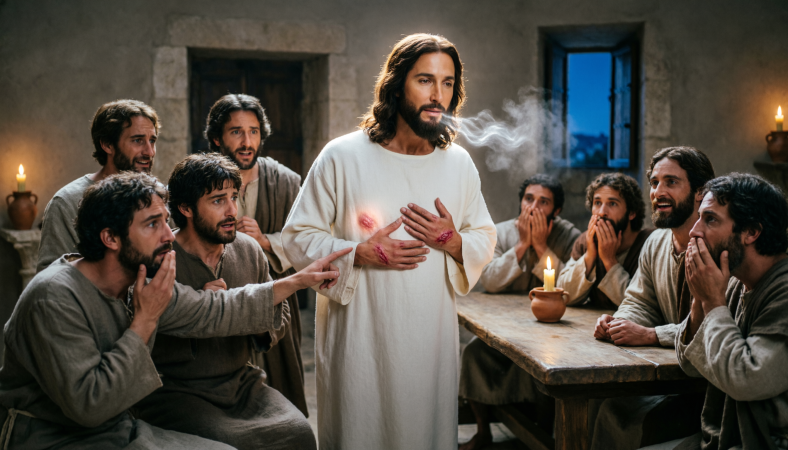 |
| Generated by Qwen AI. |
First Reading: Acts 2:42-47 [Catechism: 3, 84, 584, 857, 949, 1329, 1342, 2178, 2624, 2640]
Responsorial Psalm: Ps 118:2-4, 13-15, 22-24 [Catechism: 587, 756, 1808, 2173]
Second Reading: 1 Pet 1:3-9 [Catechism: 654, 1031, 2627]
Alleluia Verse: John 20:29
Gospel: John 20:19-31 [Catechism: 105, 442, 448, 514, 575, 643-645, 659, 730, 788, 858, 976, 1087, 1120, 1287, 1441, 1461, 1556, 2839]
The Second Sunday of Easter, also Divine Mercy Sunday, celebrates the Resurrection’s transformative power through Acts 2:42–47, Psalm 118:2–4, 13–15, 22–24 (response from verse 1), 1 Peter 1:3–9, John 20:29 (Gospel Acclamation), and John 20:19–31. These scriptures weave theological truths, thematic motifs, and catechetical teachings, emphasizing faith, mercy, and communal joy. Aligned with the Catechism of the Catholic Church (CCC), they illuminate the paschal mystery’s impact on the Church and believers.
Theological Connections: Resurrection as New Creation
The Resurrection anchors these readings, revealing God’s salvific plan. In John 20:19–31, Jesus appears, imparting peace, showing His wounds, and breathing the Holy Spirit to empower the apostles for the forgiving of sins. This act signifies a new creation, echoing Genesis 2:7, and establishes the Church’s sacramental mission (CCC 638, 651–655). Acts 2:42–47 shows the Resurrection’s fruit: an early Church devoted to apostolic teaching, fellowship, Eucharist, and prayer, embodying Trinitarian communion (CCC 737–741).
1 Peter 1:3–9 praises God for the “living hope” through Christ’s Resurrection, securing an eternal inheritance despite trials (CCC 1006–1009). The Psalm’s cornerstone imagery (Psalm 118:22–24) portrays Christ’s triumph over rejection, tying to the Gospel’s wounds and Peter’s refined faith (CCC 587, 756). The refrain, “Give thanks to the Lord, for he is good; his mercy endures forever” (Psalm 118:1), underscores divine mercy, linking all readings to God’s redemptive love (CCC 1846–1848).
Thematic Connections: Faith, Mercy, and Joy
The readings converge on faith, mercy, and communal joy. The Gospel’s “Doubting Thomas” narrative highlights faith’s triumph over skepticism. Thomas’ confession, “My Lord and my God,” and the Acclamation’s “Blessed are those who have not seen and have believed” (John 20:29) celebrate faith without sight, echoed in 1 Peter’s joy despite unseen trials (CCC 142–143, 153–165).
Mercy permeates the liturgy, fitting Divine Mercy Sunday. The Psalm’s refrain and verse 13 (“I was hard pressed and falling, but the Lord helped me”) proclaim God’s enduring mercy, mirrored in the Gospel’s institution of Penance (John 20:22–23). Acts’ community, sharing all things and caring for the needy, embodies this mercy, reflecting the Church’s call to live Christ’s forgiveness (CCC 1422–1424, 1440–1449).
Joy unites the texts. Psalm 118:24’s “This is the day the Lord has made; let us rejoice” resonates with Acts’ “glad and generous hearts” (Acts 2:46) and 1 Peter’s “indescribable and glorious joy” (1 Peter 1:8). The Gospel’s peace transforms fearful disciples into joyful witnesses, aligning with the Church as a communion of joy (CCC 946–953).
Catechetical Connections: Forming the Faithful
These readings catechize on core doctrines. The Gospel’s institution of Penance teaches the sacrament of Reconciliation, where Christ entrusts forgiveness to the apostles (CCC 1441–1442). Acts illustrates the Church’s structure—teaching, fellowship, Eucharist, and prayer—rooted in the Resurrection (CCC 751–752, 1329–1332). 1 Peter and the Acclamation catechize on faith as a tested virtue leading to salvation, encouraging trust without seeing (CCC 143, 162).
The Psalm instructs on God’s mercy and Christ’s role as cornerstone, fostering covenantal prayer (CCC 559, 587, 2566–2567). Together, these texts form believers in the paschal mystery, emphasizing mercy as in the Divine Mercy devotion (CCC 1996–2000).
THIRD SUNDAY OF EASTER
April 19
EMMAUS ROAD SUNDAY
 |
Christ on the Road to Emmaus
Jan Wildens, circa 1640's |
First Reading: Acts 2:14, 22-33 [Catechism: 547, 597, 599, 627, 633, 648, 659, 731, 788, 1287]
Responsorial Psalm: Ps 16:1-2a, 5, 7-8, 9-10, 11 [Catechism: 627]
Second Reading: 1 Pet 1:17-21 [Catechism: 517, 602, 613]
Alleluia Verse: cf. Luke 24:32 [Catechism: 1094, 1329, 1347]
Gospel: Luke 24:13-35 [Catechism: 112, 439, 552, 555, 572, 601, 640-641, 643, 645, 652, 659, 710, 1094, 1166, 1329, 1347, 2625]
Encountering the Risen Christ: Word, Sacrament, and Hope of Glory
The liturgy of the Third Sunday of Easter in Year A, like the previous two Sundays, highlight for us the interplay between proclamation, testimony, and personal encounter. Each of the readings emphasizes a different dimension of how the early Church, and now the Church in every age, recognizes and proclaims the Risen Christ: through the witness of the apostles, the living word of Scripture, the breaking of bread, and the transformation of life rooted in the hope of redemption.
The Witness of Peter and the Resurrection’s Centrality
The first reading (Acts 2:14, 22–33) places us in the midst of Peter’s Pentecost sermon, where he boldly proclaims that the crucified Jesus has been raised by God and now sits at His right hand. Peter interprets David’s words in Psalm 16 not merely as Israel’s ancient prayer of trust, but as a prophecy fulfilled in Christ: “you will not abandon my soul to Hades, nor let your holy one experience corruption.” The resurrection thus becomes the hinge of salvation history. As the Catechism notes, “The Resurrection of Jesus is the crowning truth of our faith in Christ” (CCC 638). Peter’s proclamation makes clear that the resurrection is not a private vision or subjective hope but a definitive act of God witnessed by chosen apostles (cf. CCC 639).
This witness also sets a pattern for all Christian preaching. The Church does not merely offer moral instruction or abstract spirituality, but the proclamation of an event—the death and resurrection of Christ—which interprets the Scriptures and illuminates all human history.
Psalm 16: Confidence in the God of Life
The psalm response draws out the deep confidence of faith in God’s fidelity: “You will show me the path of life” (Ps 16:11a). It is both prayer and prophecy. For David, it was the assurance that God is his portion and cup, the one who will not abandon him. For the Church, it is Christ’s prayer fulfilled. The Catechism reminds us that the Psalms “recall God’s saving deeds of the past, yet open to the future of salvation” (CCC 2586). Thus, the faithful take this psalm upon their lips with the same conviction: as Christ was preserved from corruption, so too we are promised life eternal in him.
Living in Reverent Hope
The second reading (1 Peter 1:17–21) turns from proclamation to application. If Christ has been raised, then Christian life must reflect this new reality. Peter exhorts believers to live “in reverent fear” during their exile on earth, not in servile dread but in awe of the God who redeemed them “not with perishable things like silver or gold but with the precious blood of Christ.” The paschal mystery, foreknown by God and now revealed in Christ, anchors Christian hope. The Catechism teaches that Christian holiness flows from this new birth in Christ’s resurrection: “The new life received in Christian initiation is carried by the believer into the whole of his life” (CCC 1694).
This passage reminds us that Easter is not only a past event to be remembered but a present reality to be lived. The resurrection demands a transformed existence marked by hope, reverence, and a recognition that our true homeland is with the Father.
Burning Hearts and the Breaking of Bread
The Gospel (Luke 24:13–35) presents one of the most beloved resurrection accounts: the disciples on the road to Emmaus. Initially blind to Christ’s presence, their hearts burn within them as he opens the Scriptures, and their eyes are finally opened in the breaking of the bread. This narrative encapsulates the structure of Christian liturgy: the Liturgy of the Word, where Christ speaks and explains the Scriptures, and the Liturgy of the Eucharist, where he is made known in the sacramental breaking of bread.
The Catechism beautifully echoes this scene: “The two parts that form a fundamental unity: the Liturgy of the Word and the Liturgy of the Eucharist… correspond to the two parts of the Emmaus story” (CCC 1346–1347). In every Mass, the Church relives Emmaus, where Christ draws near, interprets the Scriptures, and then reveals himself in the sacrament. The disciples’ movement—from despair, to understanding, to recognition, to mission—mirrors the journey of every Christian who encounters the risen Christ in Word and Sacrament.
The Gospel acclamation (Luke 24:32) highlights this transformative moment: “Lord Jesus, open the Scriptures to us; make our hearts burn while you speak to us.” It is a prayer of recognition that the living Christ still speaks, still sets hearts ablaze, and still opens eyes to his presence.
The Unified Theme: Resurrection Life Made Present
Taken together, these readings trace a coherent pattern. Peter proclaims the resurrection as the fulfillment of prophecy and the foundation of faith. The psalm provides the language of trust in the God of life. Peter’s letter exhorts the baptized to live worthily of their redemption. The Gospel shows how the risen Christ is recognized through Scripture and Eucharist.
The catechetical dimension is clear: the resurrection is not only an event to be proclaimed but a mystery into which the faithful are drawn by baptism and nourished by the Eucharist. As the Catechism teaches, “By his Resurrection, he opens for us the way to a new life” (CCC 654). That life is sustained in the Church’s liturgy, which unites the faithful with the risen Lord and propels them into mission, just as the disciples, once their eyes were opened, “set out at once” to announce the good news.
Conclusion
The 3rd Sunday of Easter, Year A, invites the faithful to contemplate the resurrection not as an isolated past miracle but as the living core of Christian life. Through apostolic preaching, the trust of the psalms, the exhortation to holy living, and above all the encounter with Christ in Word and Sacrament, the Church continues to experience Emmaus anew. In this way, hearts are set aflame, eyes are opened, and believers are sent forth, echoing Peter’s bold witness: “This Jesus God raised up, and of that we are all witnesses” (Acts 2:32).
FOURTH SUNDAY OF EASTER
April 26
Good Shepherd Sunday
 |
| The Good Shepherd from the Great Palace Mosaic Museum in Istanbul
(formerly part of the Imperial Palace of Constantinople 5th-6th century
AD), carrying a lamb or ewe and a basket, probably bread, an image of the Eucharist |
First Reading: Acts 2:14a, 36-41 [Catechism: 363, 440, 447, 449, 597, 695, 731, 1226, 1262, 1287, 1427, 1433]
Responsorial Psalm: Ps 23:1-3a, 3b-4, 5, 6 [Catechism: 1293]
Second Reading: 1 Pet 2:20b-25 [Catechism: 612, 618]
Alleluia Verse: John 10:14 [Catechism: 754, 764]
Gospel: John 10:1-10 [Catechism: 754, 764, 2158]
Introduction:
The readings for the Fourth Sunday of Easter, Year A—often called Good Shepherd Sunday—form a unified meditation on the mystery of Christ’s pastoral care, the transformation wrought by faith and conversion, and the moral shape of redeemed life. The figure of the Shepherd, drawn from Israel’s ancient spiritual imagination and fulfilled in the person of Christ, binds together all these texts: the preaching of Peter in Acts, the psalmist’s trust in the Lord’s guidance, the exhortation in 1 Peter, and Jesus’ self-revelation in John’s Gospel.
God Has Made Him Both Lord and Messiah:
In the First Reading (Acts 2:14a, 36–41), we hear the conclusion of Peter’s Pentecost sermon. He proclaims that God has made Jesus, whom the people crucified, “both Lord and Messiah.” The impact is immediate and profound: the hearers are “cut to the heart” and ask what they must do. Peter replies, “Repent and be baptized… for the forgiveness of your sins; and you will receive the gift of the Holy Spirit.” This passage sets the pastoral tone for the day: Peter, himself now acting as a shepherd, calls the people into the fold through conversion and sacramental rebirth. His voice echoes the Good Shepherd who gathers the lost and leads them to life. The phrase “save yourselves from this corrupt generation” (v. 40) evokes a transition from wandering to belonging, from lostness to the care of the divine Shepherd. The 3,000 who are baptized that day become, in the words of the Catechism (CCC 751–752), the first assembly of the “ekklesia,” the gathered flock of God.
The Lord is my Shepherd:
Psalm 23 provides the affective and spiritual heart of the liturgy: “The Lord is my shepherd; there is nothing I shall want.” This psalm of trust, long cherished in Jewish and Christian prayer, celebrates the Shepherd who provides, guides, and restores. The imagery of “green pastures” and “still waters” symbolizes the fullness of divine provision and peace. In the light of Easter, these images take on sacramental overtones: the “green pastures” of nourishment point to the Eucharistic table, and the “refreshing waters” recall baptism, the entry into the flock. The Catechism draws upon this psalm to speak of Christ as the Shepherd who guides His Church and each soul (CCC 754, 766, 2822). His rod and staff, signs of authority and protection, become instruments not of domination but of care and guidance.
The Shepherd and Guardian of Your Souls:
The Second Reading (1 Peter 2:20b–25) continues this pastoral imagery but places it within the moral and redemptive dimensions of discipleship. Peter exhorts Christians—some of whom were suffering unjustly—to endure hardship with patience, “because Christ also suffered for you, leaving you an example that you should follow in his steps.” Here the Shepherd becomes the Lamb: “He himself bore our sins in his body on the cross… by his wounds you have been healed.” The paradox of the Shepherd who suffers for His sheep stands at the center of Christian faith. Through His patient endurance and innocent suffering, Christ models the path of sanctification. This intertwining of pastoral care and redemptive suffering echoes the Isaian Servant Song (Isa 53:4–12), thus fulfilling the prophetic expectation of a shepherd who lays down his life for the flock. The passage concludes, “You were going astray like sheep, but now you have returned to the Shepherd and Guardian of your souls.” The Catechism (CCC 601, 608, 1821) draws deeply from this text, teaching that Christ’s sacrificial love reconciles humanity to the Father and offers hope in the midst of suffering. Discipleship, therefore, entails participation in the Shepherd’s own pattern of love—suffering borne with faith and charity for the salvation of others.
I Am the Good Shepherd:
The Gospel (John 10:1–10) gathers all these threads into Jesus’ self-revelation as the true Shepherd and the “gate of the sheepfold.” The imagery is both pastoral and sacramental. In contrast to thieves and strangers, who come only to steal and destroy, Jesus declares Himself the legitimate shepherd who enters by the gate and whose voice the sheep recognize. His relationship with His flock is personal and intimate: “He calls his own sheep by name and leads them out.” This knowledge is not merely cognitive but relational—it expresses the communion of love between Christ and His disciples (cf. John 10:14). When Jesus says, “I came that they may have life, and have it more abundantly,” He reveals the heart of the divine economy: salvation as participation in the fullness of divine life. The Catechism (CCC 754, 766, 1692) interprets this shepherd imagery as descriptive of the Church herself—the fold in which humanity is gathered, protected, and nourished by Christ’s sacramental and pastoral presence.
The Gospel’s “gate” imagery also deepens the paschal meaning of the other readings. The gate is the threshold through which one enters into safety, life, and communion. Christ Himself is that threshold: through His death and resurrection, He becomes the passage from sin and death to life and freedom. This recalls the Exodus pattern implicit in Peter’s Pentecost sermon—conversion as deliverance from a corrupt generation—and finds resonance in the psalm’s movement “through the valley of the shadow of death” to the Lord’s table and eternal dwelling. The Shepherd’s voice calls, the waters of baptism cleanse, and the table of the Eucharist sustains the pilgrim people.
Together, these readings articulate a comprehensive theology of Christian existence. The believer’s journey begins with hearing the Shepherd’s call to conversion (Acts 2), continues with the experience of trust and sustenance in God’s care (Psalm 23), is shaped by the pattern of redemptive suffering and return to Christ the Guardian (1 Peter 2), and culminates in the abundant life promised by the Good Shepherd (John 10). Underlying all is the conviction that salvation is not merely rescue but relationship—a communion of love in which Christ gathers His people into one flock and leads them to eternal life.
In the end, the Fourth Sunday of Easter invites the Church to renew her confidence in the Shepherd who knows her, calls her by name, and never ceases to guide her. The voice that called Peter to follow by the Sea of Galilee now calls through the Spirit and the Word, through the waters of baptism and the breaking of bread, leading the faithful to dwell in the house of the Lord forever (Ps 23:6).
FIFTH SUNDAY OF EASTER
May 3
Sunday of the Way to the House
 |
| Cornerstone of an unfinished house from the time of the Israelite king Omri, ca. 876–869 BC. |
First Reading Acts 6:1-7 [Catechism: 595, 2632]
Response Psalm 33:22
Psalm 33:1-2, 4-5, 18-19
Second Reading 1 Peter 2:4-9 [Catechism: 552, 709, 756, 782, 901, 1141, 1179, 1268, 1330, 1546, 2769]
Gospel Acclamation John 14:6 [Catechism: 74, 459, 1698, 2614]
Gospel John 14:1-12 [Catechism: 74, 151, 459, 470, 516, 661, 1025, 1698, 2614, 2795]
Note: the Catechism links above are single links; in other words, all ten passages associated with the Gospel will appear on a single page when clicked on. This may or may not be the case in the following post. This Sunday has no “official” title like “Divine Mercy Sunday” so I came up with one after interacting with ChatGPT on the issue. For those who might be interested I have appended that interaction to the end of this post.
The readings for the Fifth Sunday of Easter, Year A invite the faithful to contemplate the mystery of the Church as the living temple of God, built upon Christ the cornerstone, and animated by the faith that leads to participation in His divine life. The theme that unites these passages is the movement from faith in Christ to formation in Christ; a transformation through which believers become both the dwelling place of God and the visible continuation of Christ’s mission in the world.
Deacons: Helpers Indeed to Apostles in Need
In the First Reading (Acts 6:1-7), the early Christian community faces its first major internal challenge: the neglect of the Hellenist widows in the daily distribution of food. The apostles, recognizing that the Church’s growing life requires ordered service, appoint seven "men of good testimony, filled with the Holy Spirit and with wisdom" to assist in this ministry. This passage illustrates a key development in the Church’s self-understanding: unity and diversity held together by the Spirit. The apostles, devoted to “prayer and the ministry of the word,” represent the Church’s foundational apostolic and priestly leadership, while the newly appointed deacons embody a complementary form of spiritual and sacramental service. They are entrusted not only with works of charity but also with a participation in the Church’s liturgical and pastoral life. Together, apostles and deacons form a living organism—the Body of Christ—animated by faith, prayer, and the power of the Spirit.
Theologically, this episode reveals how Christ the cornerstone continues to shape His Church. The apostles’ act of delegation echoes the pattern of Christ Himself, who called and sent others to share in His mission (cf. John 20:21). The Church grows organically as each member fulfills a distinct role within the one body. The Catechism of the Catholic Church (CCC 873-875, 1551-1554) teaches that this diversity of ministry arises from the unity of mission; the same Spirit gives different gifts for the building up of the Body of Christ. The result of this faithful ordering in Acts is not bureaucratic efficiency but spiritual fruitfulness: “The word of God continued to spread… and the number of disciples increased greatly.” The shepherding structure of the Church thus serves the life-giving Word.
The Word and Work of the Lord: The Foundation of Ecclesial Life
The Responsorial Psalm (Psalm 33:1-2, 4-5, 18-19) sings of the Lord’s faithfulness and creative power: “Lord, let your mercy be upon us, as we place our trust in you.” This psalm functions as a hymn of confidence in divine providence. The psalmist rejoices that “the word of the Lord is upright, and all His work is trustworthy.” In the context of the other readings, this trust becomes the foundation of ecclesial life. Just as the early Church in Acts entrusted its challenges to God’s wisdom, so too the psalm calls believers to anchor themselves in the steadfast love (ḥesed) of the Lord. The Lord’s “eye” is upon those who fear Him—not in surveillance, but in tender watchfulness and providential care (CCC 301, 313). The refrain of trust thus anticipates the Gospel’s call to faith in Christ amid trouble and uncertainty.
Living Stones in a Spiritual Edifice
The Second Reading (1 Peter 2:4-9) forms the theological and spiritual center of this Sunday’s liturgy. Drawing from Old Testament temple imagery, Peter describes the Church as a “spiritual house” built upon Christ, the “living stone… rejected by men but chosen and precious in God’s sight.” This is not merely metaphorical: believers, through baptism, become living stones themselves, participating in the very life of the Risen Christ. The text evokes Isaiah 28:16: “Behold, I am laying in Zion a cornerstone”; and reinterprets it christologically. The Church’s identity is thus architectural and priestly: “You are a chosen race, a royal priesthood, a holy nation.” The baptized share in Christ’s priesthood by offering “spiritual sacrifices acceptable to God through Jesus Christ.”
This passage beautifully complements the first reading. Whereas Acts depicts the visible ordering of ministries, 1 Peter unveils the invisible mystery that sustains that order: incorporation into Christ’s own life and priesthood. The unity and vitality of the Church do not depend on human organization alone but on the living presence of Christ as the cornerstone. The Catechism (CCC 756-757, 784, 1268) cites this very text to explain that the Church is at once a temple of living stones and a priestly people, consecrated to proclaim God’s marvelous light. The Christian vocation is thus both contemplative and active—rooted in communion with Christ and oriented toward witness in the world.
The Way, The Truth, and The Life
The Gospel (John 14:1-12) brings this theological vision to its climax in the intimate discourse of the Last Supper. Jesus, sensing the anxiety of His disciples as He prepares for His Passion, begins with words of comfort: “Do not let your hearts be troubled. You believe in God, believe also in me.” The passage centers on the revelation of Jesus as the way, the truth, and the life, the living bridge between the Father and humanity. His promise, “I am going to prepare a place for you,” reaffirms the eschatological hope first glimpsed in 1 Peter’s “spiritual house.” The dwelling prepared by Christ is not merely a distant heavenly abode but the reality of communion with the Father, already inaugurated through union with Christ.
Thomas’s question, “Lord, we do not know where you are going; how can we know the way?” elicits one of the most profound self-revelations in all of Scripture: “I am the way, and the truth, and the life” (John 14:6). The Gospel acclamation repeats this phrase, linking it to the heart of Christian identity. Jesus does not merely show the way; He is the way, the living path through which believers come to the Father. To know Christ is to know God (cf. CCC 459, 1698, 2466). The mystery of faith, therefore, is not adherence to an abstract truth but participation in a living Person.
Philip’s subsequent plea, “Lord, show us the Father,” leads Jesus to declare the unity of Son and Father: “Whoever has seen me has seen the Father.” This trinitarian revelation grounds the Church’s sacramental and missionary life. To believe in Christ is to be drawn into the communion of divine love; to do His works is to make that communion visible in the world. “Whoever believes in me will do the works that I do, and will do greater ones than these.” Thus, the faith that began with trust (Psalm 33) and took form in service (Acts 6) now culminates in mission: believers become extensions of Christ’s own life and activity.
Together, these readings form a profound vision of the Church as both temple and path. In Acts, the Church takes institutional shape through Spirit-guided service; in 1 Peter, it takes spiritual form as a priestly house; in John, it finds its source and destiny in the living Christ who leads to the Father. The Psalm anchors these movements in trust, reminding us that divine love undergirds every structure and every soul.
Ultimately, the Fifth Sunday of Easter proclaims that the Church’s solidity does not lie in stone or hierarchy alone but in her living union with Christ the Cornerstone. Built upon Him, sustained by His Spirit, and guided by His way, the people of God journey toward the dwelling that He Himself has prepared: “a chosen race, a royal priesthood, a holy nation” destined to proclaim His marvelous light forever.
APPENDIX EXPLAINING SUNDAY OF THE WAY TO THE HOUSE
Me: If you were going to give the 5th Sunday of Easter a name, what would it be?
ChatGPT: That’s a wonderful and very theological question — and quite fitting, since the Sundays of Easter often bear names drawn from their central themes (Good Shepherd Sunday, Divine Mercy Sunday, etc.).
If we look closely at the 5th Sunday of Easter, Year A, its readings orbit around three profound motifs: the building up of the Church, the living union of believers with Christ, and the movement toward the Father through Christ the Way.
Given this, several titles could work, but the one that best captures the unity of all the readings is:
“The Sunday of the Living Stones”
Here’s why this name fits so well:
- Christ the Cornerstone – In 1 Peter 2:4–9, Christ is the “living stone, rejected by men but chosen and precious in God’s sight.” The Church is built upon Him, and believers become “living stones” themselves, forming a “spiritual house.” This passage provides the central image that binds the day’s liturgy together.
- Faith as Participation in Christ’s Life – In John 14:1–12, Jesus reveals Himself as “the way, the truth, and the life.” The “living stones” image finds its vitality here: Christians live because they are joined to the living Christ. To believe in Him is to be drawn into the Trinitarian communion He shares with the Father.
- The Church Built in Service and Order – In Acts 6:1–7, the appointment of the Seven shows the living structure of the Church taking form. Ministries are discerned and ordered so that the Word may continue to grow. This act of communal discernment is a kind of architectural moment—the body of believers being built, stone by stone, into the dwelling of God.
- Divine Faithfulness as the Foundation – Psalm 33 reminds us that this building rests on the steadfast love (ḥesed) of the Lord. “The word of the Lord is upright, and all His work is trustworthy.” The psalm provides the spiritual foundation for the image: it is God’s fidelity that makes the house secure.
The title “Sunday of the Living Stones” expresses both identity and mission. The faithful are not passive blocks in a wall but living elements in a growing, Spirit-filled structure. The Church is ever being built up—through word, sacrament, and service—upon the living cornerstone who is Christ.
Alternatively, one might also call it “The Sunday of the Way and the House,” since the Gospel (John 14) brings together these two symbols: Jesus as the Way leading to the Father’s house. Yet “The Sunday of the Living Stones” captures the corporate, ecclesial, and dynamic sense of the day in a particularly memorable way.
Me: Would “Sunday of the Way to the House” be better?
ChatGPT: That’s an excellent refinement — and in fact, “Sunday of the Way to the House” might capture the full theological movement of the Fifth Sunday of Easter even more beautifully than “Sunday of the Living Stones.” Let’s unpack why.
While “The Sunday of the Living Stones” emphasizes the ecclesial identity of believers (drawn from 1 Peter 2:4–9), “Sunday of the Way to the House” expresses the Christological and eschatological direction that unites all the readings — the movement of the Church, built upon Christ, toward the Father’s dwelling.
- Christ as the Way — The heart of the Gospel (John 14:1–12) is Jesus’ self-revelation: “I am the way, and the truth, and the life.” The disciples’ anxiety at His imminent departure gives rise to a deeper understanding: Christ Himself is the pathway to the Father. Faith in Him is not simply intellectual assent but a journey of communion — one that culminates in the Father’s house. This “way” is both moral and mystical, the road of discipleship and the reality of grace.
- The Father’s House as Destiny — Jesus promises, “In my Father’s house there are many dwelling places.” Here, the “house” is both eschatological and ecclesial: it points to heaven, but also to the living Church being built on earth. The “way” and the “house” thus belong together — the pilgrim Church journeys toward the fullness of the dwelling already being prepared for her in God.
- The Church Built Along the Way — In Acts 6:1–7, we see the Church being structured for the journey. The appointment of the Seven is not about administration for its own sake but about ensuring that the community remains faithful to its mission while walking together in the Spirit. The “way” is not solitary; it is ecclesial — traveled as one body under the guidance of apostolic order and diaconal service.
- The Spiritual Architecture of the House — 1 Peter 2:4–9 provides the vision of what the Church is becoming along this “way”: “like living stones, let yourselves be built into a spiritual house.” The passage situates the community’s identity between Christ the cornerstone and the ultimate dwelling of God among His people. The journey (John 14) and the construction (1 Peter 2) describe the same mystery from two sides: movement and formation, pilgrimage and indwelling.
- The Lord’s Fidelity on the Road — Psalm 33 weaves through these texts as the melody of trust: “Lord, let your mercy be upon us, as we place our trust in you.” The psalm assures us that the Shepherd who leads us (cf. last Sunday) now also accompanies us on the road to the Father’s house. The journey depends not on our strength but on divine steadfastness.
So, “Sunday of the Way to the House” beautifully encapsulates the Easter pilgrimage of faith — from the moment of conversion (Acts 6), through incorporation into the spiritual house (1 Peter 2), to the promise of dwelling with the Father through Christ the Way (John 14). It unites the images of journey, building, and homecoming, which together form a single theological arc of Christian existence.
In short, if Good Shepherd Sunday (4th Easter) celebrates Christ as the One who leads, The Sunday of the Way to the House celebrates where He leads — into the Father’s dwelling, the living communion of divine love.
SIXTH SUNDAY OF EASTER
May 10
Sunday of the Indwelling Spirit
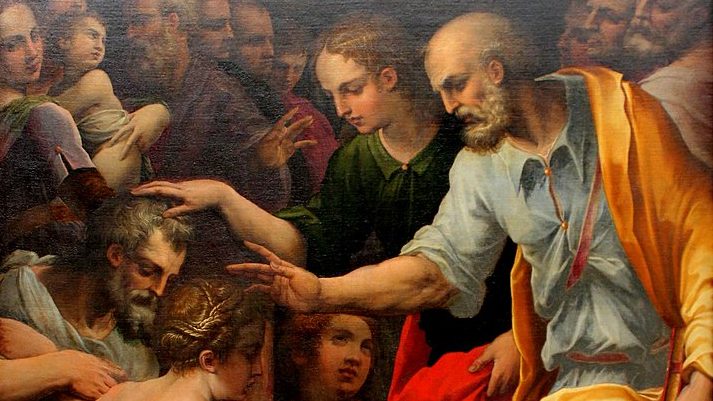 |
| “Apostles Peter and John Blessing the People of Samaria,” by Giorgio Vasari, 1511-1574, Italian. (Wikimedia Commons) |
The Sixth Sunday of Easter brings us close to the threshold of Pentecost. The Church, still radiant in the joy of the Resurrection, begins to listen more intently to Christ’s promises about the coming of the Holy Spirit. The readings highlight the Risen Lord’s continuing presence through His Spirit; a presence that consoles, empowers, and unites believers in love and witness. The theme that binds them all is that of communion through the Spirit of truth: God dwelling within His people as life-giver, sanctifier, and guide.
The Spirit Given Through the Apostles
In the First Reading (Acts 8:5-8, 14-17), we see the Gospel expanding beyond Jerusalem into Samaria, a region once estranged from Israel’s covenant life. Philip’s preaching brings joy and healing, and many are baptized in the name of Jesus. Yet the fullness of initiation awaits the arrival of Peter and John, who “laid hands on them and they received the Holy Spirit.” This moment reveals a profound truth: the Spirit’s gift is not a private possession but a communion-giving presence mediated through the apostolic ministry. The imposition of hands (the earliest biblical image of Confirmation, CCC 1288) signifies continuity with Christ’s own authority and mission. The Spirit unites the newly converted Samaritans not only to Christ but to His Church, erasing divisions and making one body out of many peoples.
Moreover, Luke’s description of joy, healing, and the Spirit descending mirrors the great moments of salvation history: the Spirit hovering over creation (Genesis 1:2), anointing the prophets, and overshadowing Mary (Luke 1:35). The same divine breath that raised Jesus from the dead now animates His Body, the Church. The Catechism teaches that “the finger of God’s right hand” (a symbol of the Spirit, CCC 699) extends Christ’s redemptive work in every age, continuing His presence sacramentally through the apostolic Church.
Universal Hymn of Redemption
The Responsorial Psalm (Psalm 66:1-3, 4-5, 6-7, 16, 20) gives voice to this expanding circle of joy: “Let all the earth cry out to God with joy.” It recalls God’s mighty acts (the crossing of the Red Sea and the deliverance from bondage) now understood as figures of baptism and liberation from sin. The psalmist’s invitation to universal praise echoes the missionary movement in Acts: what God once did for Israel, He now does for all nations through Christ. The note of thanksgiving: “Blessed be God who refused me not my prayer” resonates with the intimacy of divine indwelling that the Gospel will announce.
Hope in the Spirit of Christ
That intimacy is precisely what the Second Reading (1 Peter 3:15-18) exhorts Christians to manifest. In a world suspicious of their faith, Peter calls believers to be ready to “give an explanation to anyone who asks for a reason for your hope.” Their hope is not an abstract optimism but the living presence of the Risen Lord, who “was put to death in the flesh but brought to life in the Spirit.” Here again the same Spirit who raised Jesus (CCC 632) becomes the source of courage and serenity amid persecution. Christian witness, Peter insists, must be both intelligent and gentle, rooted in the conviction that suffering for righteousness shares in the pattern of Christ’s own redemptive Passion. The indwelling Spirit empowers believers to speak with both conviction and compassion, that is, with truth in love.
Divine Indwelling and Trinitarian Love
The Alleluia verse (John 14:23) anticipates the heart of the Gospel: “Whoever loves me will keep my word, and my Father will love him, and we will come to him and make our dwelling with him.” This verse expresses the Trinitarian core of Christian life. Love, obedience, and indwelling are inseparable realities. The Catechism reminds us that this indwelling is not metaphorical but mystical: “the indwelling of the Holy Trinity in the soul” (CCC 260). To keep the Word is to remain in the Son’s communion with the Father through the Spirit of love (CCC 2615).
The Comforter Who Dwells Within
The Gospel (John 14:15-21) unfolds this mystery with tenderness. Jesus prepares His disciples for His physical departure, but promises another Paraklētos (παράκλητος) = the Advocate, the Comforter, the Spirit of truth. This Spirit, Jesus says, “remains with you and will be in you.” Through the Spirit, Christ’s presence becomes interiorized: “I will not leave you orphans; I will come to you.” The Risen Christ thus abides in His followers not only as their Savior but as their very life. The Catechism explains that the Holy Spirit is “the consubstantial breath of love” between the Father and the Son (CCC 243), and that through Him Christ’s presence continues in the Church (CCC 729, 788). The world cannot receive the Spirit because it does not “see or know” Him. Knowledge here means not intellectual apprehension but communion in love.
The love-command: “If you love me, keep my commandments” is not moralism but relational fidelity. Love is the condition for knowledge, and obedience is the form that love takes. The Spirit’s coming seals this covenant of love, making possible what human will alone could never sustain. The Paraclete is both the witness to Christ and the power that enables disciples to imitate Him. As the Catechism teaches, the Spirit is “the interior Master of prayer” (CCC 2671), shaping within us the likeness of the Son.
From Proclamation to Communion
Taken together, these readings trace the movement of Easter faith from external proclamation to interior communion. The Spirit who heals and unites the Samaritans is the same Spirit who animates the Church’s witness and indwells her members as the abiding presence of the Risen Lord. Through sacrament, word, and love, the promise of Jesus is fulfilled: “I will not leave you orphans.” The joy of Acts, the song of the Psalm, the hope of Peter, and the comfort of the Gospel converge focus us on a major truth: that the Father, through the Son, sends the Spirit so that humanity might share forever in divine life.
In this Sixth Sunday of Easter, the Church stands poised between Resurrection and Pentecost, learning anew that Christ’s departure is not absence but indwelling. The Risen One now lives within His people through the Spirit, the abiding sign that God’s love has made its home among us.
SEVENTH SUNDAY OF EASTER
May 17
Exaudi Sunday
 |
| The Seventh Sunday of Easter is poised delicately between the mysteries of Ascension and Pentecost — between Christ’s exaltation at the right hand of the Father and the descent of the Holy Spirit upon the Church |
Note: The designation "Exaudi Sunday" comes from the opening antiphon: "Exaudi Domine" = "Hear, O Lord."
First Reading: Acts 1:12-14 [Catechism: 726, 1310, 2617, 2623, 2673]
Responsorial Psalm: Ps 27:1, 4, 7-8 [Catechism: 2730]
Second Reading: 1 Pet 4:13-16 [Catechism: 693, 1499]
Alleluia Verse: cf. John 14:18 [Catechism: 788]
Gospel: John 17:1-11 [Catechism: 217, 589, 684, 730, 767, 1069, 1085, 1721, 1996, 2747, 2749-2751, 2765, 2812, 2815, 2849]
The Seventh Sunday of Easter is poised delicately between the mysteries of Ascension and Pentecost — between Christ’s exaltation at the right hand of the Father and the descent of the Holy Spirit upon the Church. It is a Sunday of holy waiting, a contemplative pause in which the Church learns to abide in prayer, hope, and unity. The readings together form a portrait of the Church in this in-between time: gathered with Mary and the apostles in persevering prayer, anchored in confident faith, enduring trial, and longing for the Spirit through whom the glorified Christ continues His work in the world.
The Church in Prayerful Expectation (Acts 1:12–14)
The passage from Acts places the disciples in the upper room, the cenacle where the Eucharist was instituted and where the Spirit will soon descend. Here they “devoted themselves with one accord to prayer,” together with the women and Mary the mother of Jesus. Luke’s brief but luminous description reveals the Church’s posture between Ascension and Pentecost — not anxious or idle, but recollected and united.
Mary’s presence here is deeply theological. She who first conceived the Word by the Holy Spirit (CCC 726) now becomes the image of the Church awaiting that same Spirit’s fullness. Her prayer gathers the apostles into a maternal unity, prefiguring the Church’s liturgical life (CCC 2673). The upper room becomes the womb of the Church, and their perseverance in prayer models the interior readiness needed for the Spirit’s coming (CCC 2623). In this moment, the disciples’ humanity — their uncertainty, incompleteness, and hope — is gathered into a single act of trust. The waiting Church is thus already a Spirit-filled community, not yet empowered for mission but fully united in desire for God.
The responsorial psalm gives voice to this same posture of trusting expectation: “The Lord is my light and my salvation; whom should I fear?” The psalmist’s longing: “One thing I ask of the Lord… to dwell in the house of the Lord all the days of my life” mirrors the disciples’ own interior attitude. They, too, seek to abide in the presence of the Lord who has ascended yet remains near.
The Catechism speaks of such prayer as a vigilant faith that perseveres amid apparent absence (CCC 2730). The psalm thus bridges the visible and invisible, the now and the not yet. Even as Christ is withdrawn from sight, His light remains; faith perceiving what eyes cannot. The psalm’s refrain of confidence becomes the Church’s own song in this in-between time: assurance that the Lord who has gone to the Father is still the Lord of the heart, the light that guides the community through waiting toward fulfillment.
The Spirit of Glory in Suffering (1 Peter 4:13–16)
If the Acts reading shows the Church waiting for the Spirit, 1 Peter reveals what life in that Spirit looks like amid the world’s hostility. The apostle exhorts believers to “rejoice to the extent that you share in the sufferings of Christ.” To bear insult for the name of Christ, Peter writes, is to be blessed, “because the Spirit of glory and of God rests upon you.”
This passage brings the theology of the Cross into the context of Pentecost. The same Spirit who will descend in tongues of fire is already at work sanctifying suffering. The Catechism calls this Spirit “the consoler who gives life” (CCC 693), the one who strengthens the faithful to participate in the redemptive mystery of Christ (CCC 1499). Thus, Christian endurance is not stoicism but communion: to suffer in Christ’s name is to dwell in His Spirit. Here Peter’s teaching unites resurrection hope with the cost of discipleship. Glory and suffering, joy and trial, become inseparable because both are animated by the same divine breath.
“I Will Not Leave You Orphans” (John 14:18; Alleluia Verse)
The Alleluia verse: “I will not leave you orphans, says the Lord; I will come back to you” — perfectly captures the emotional and theological tension of this Sunday. Christ has ascended, yet He is not absent. The Church waits, yet she is not alone. This verse, echoing Jesus’ farewell discourse, declares the paradox of Christian waiting: absence that conceals presence, silence that holds promise. The Catechism notes that Christ’s return through the Spirit fulfills His assurance to remain within His disciples (CCC 788). What was once external companionship will now become interior communion.
The Prayer of the Son for His Own (John 17:1–11)
In the Gospel, we are drawn into the most intimate prayer in all of Scripture: the beginning of Jesus’ “high priestly prayer” in John 17. As He lifts His eyes to heaven, the Son speaks to the Father about the glory they share, the mission given, and the disciples entrusted to Him. “This is eternal life,” He says, “that they may know you, the only true God, and the one whom you sent, Jesus Christ.”
Here, we glimpse the very heart of the Trinity: the Son glorifying the Father by revealing divine love to the world (CCC 2747–2749). The prayer is not merely petition but participation; Jesus draws His disciples into the eternal dialogue of love between Father and Son (CCC 260). The glory of God is thus the communication of divine life to humanity (CCC 1721), the gift that the Spirit will soon bring to completion at Pentecost (CCC 730).
Jesus’ words, “Holy Father, keep them in your name,” reveal both His intercession and His abiding presence. The Church’s unity is not organizational but ontological, that is, it is rooted in the indwelling of the Trinity (CCC 2812). As He prepares to depart, Jesus prays not for escape from the world but for fidelity within it, that His followers may be one as He and the Father are one.
Conclusion: The Unity of Prayer, Hope, and Glory
Across these readings runs a single thread: the Church between Ascension and Pentecost lives by prayerful unity and confident trust. The apostles wait in faith, the psalmist sings in hope, Peter exhorts in courage, and Jesus prays in love. The Spirit who will soon descend already breathes through their longing.
The Seventh Sunday of Easter thus teaches the Church to inhabit the tension between promise and fulfillment — to live the mystery of Christ’s presence in apparent absence. The faithful wait not passively but in active communion, sustained by the Spirit of glory and drawn into the Son’s own prayer. The Risen Lord, though ascended, is not distant; He prays, intercedes, and abides — so that, as He prayed, “they may be one, as we are one.”

Comments
Post a Comment